RetailTech
SafeSize — shopping ecosystem
Adding a complete e-commerce layer — cart, checkout, product cards — on top of an existing 3D foot-scanning recommendation engine without fragmenting what was already there.
Scope
The engagement
SafeSize uses 3D foot scanning to tell you exactly which shoe fits — the diagnostic layer worked. What didn't exist was a way to act on it. No cart, no checkout, no path from recommendation to purchase. The product had a senior in-house designer; I was brought in via Code.Hub for three months as an external consultant to design the missing e-commerce layer.
The brief wasn't "build the product" — it was "extend the existing design system to ship a new flow without fragmenting what's already there." Different skill. Different posture. Equally important.

The Card Problem
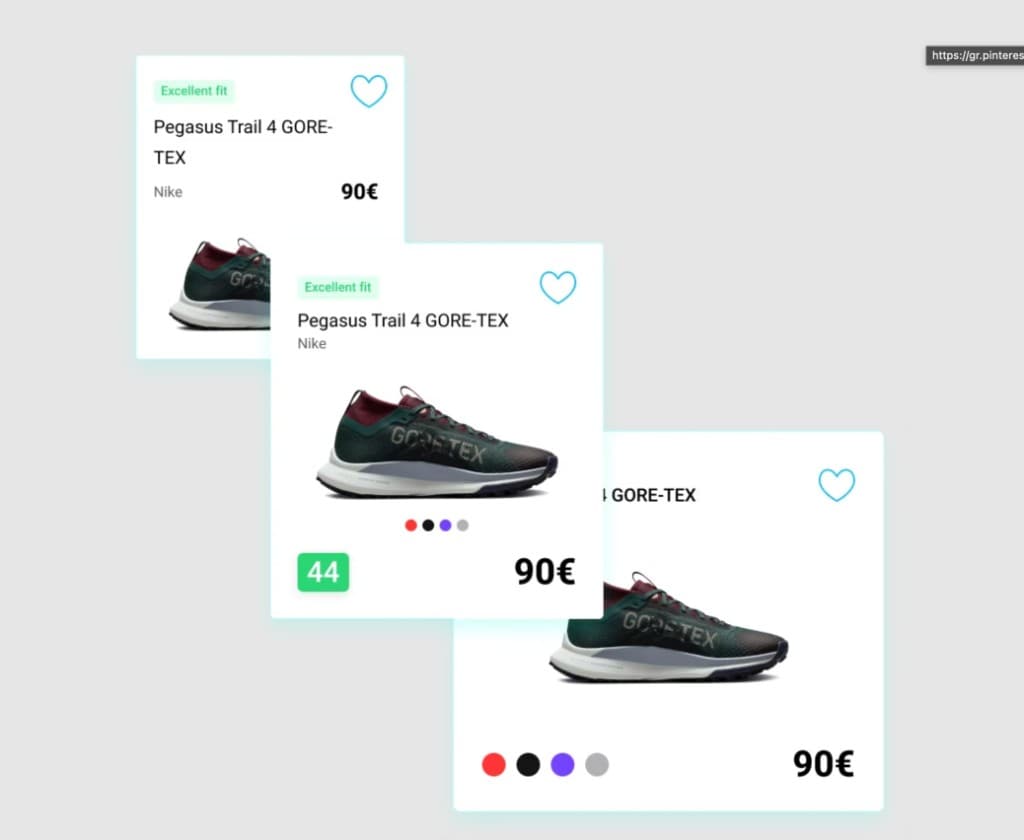
The product card was the hardest surface in the project. It was already carrying 3D scan results, fit confidence scores, and size callouts. The ask: add Add to Cart, size selection, and purchase intent actions to the same compact container — without making the scan data, which was SafeSize's core value, feel like a footnote.
The pattern that emerged: fit data should lead the hierarchy, commerce actions should follow immediately — always visible, never competing.
The Constraints
The card needed to work across three deployment contexts: the retailer's in-store kiosk interface, the embedded e-commerce widget, and the brand's own product pages. Same component, three different container widths and color contexts. This ruled out fixed-dimension design — everything had to be built with fluid proportions and context-agnostic tokens.
Component Library & Handoff
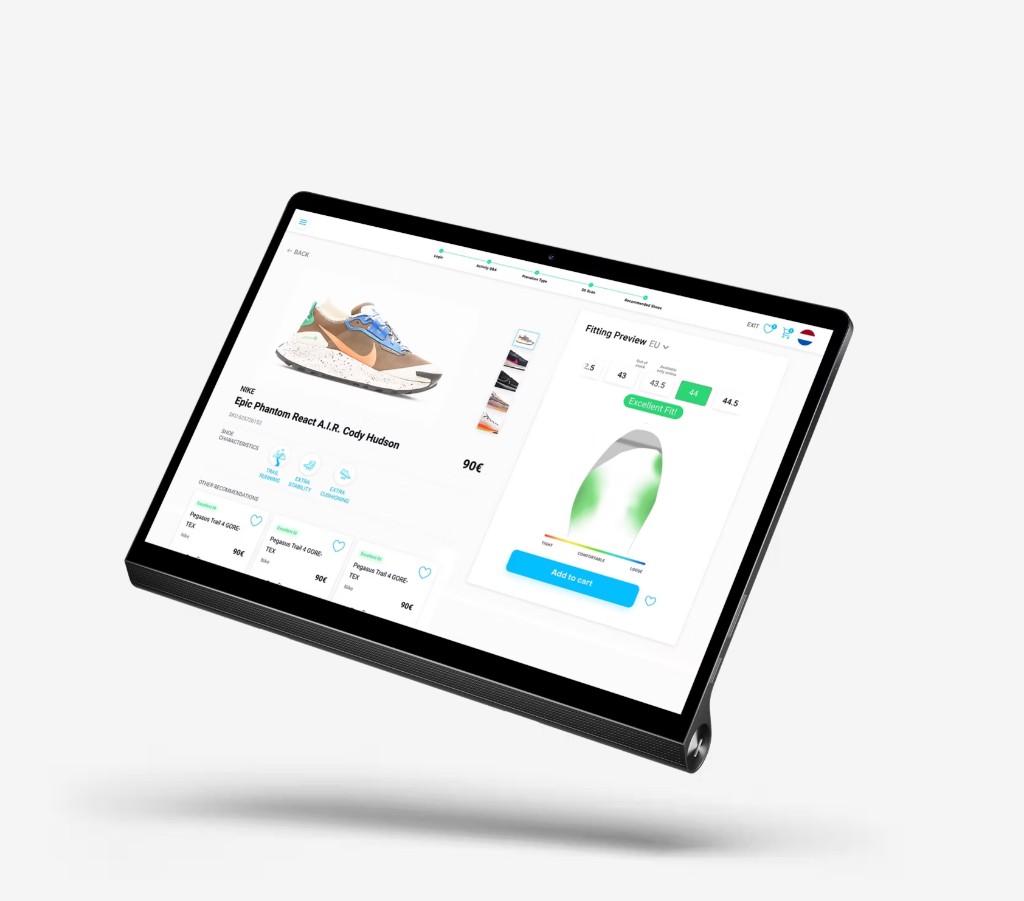
The deliverable beyond the card design was a component library for fit-diagnostic data visualization. The system was structured so SafeSize could add new shoe categories — trail running, children's footwear, orthopaedic — without requiring a design engagement for each. One component model, extended via configuration.
What this engagement was about
Consultant work in someone else's house is the test of whether a designer has ego or judgment. SafeSize shipped a complete commerce experience three months after I joined. The component library extended the existing system. The senior designer kept ownership of the broader product. That's the engagement working as designed.
Gallery
Outcomes