The Brief
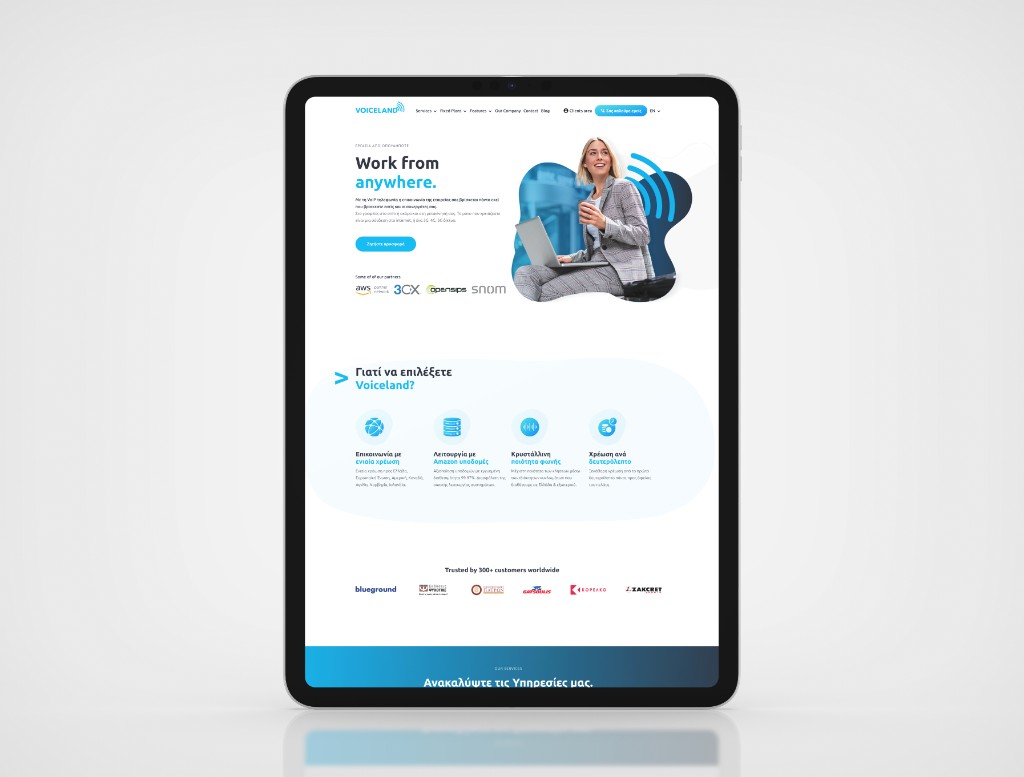
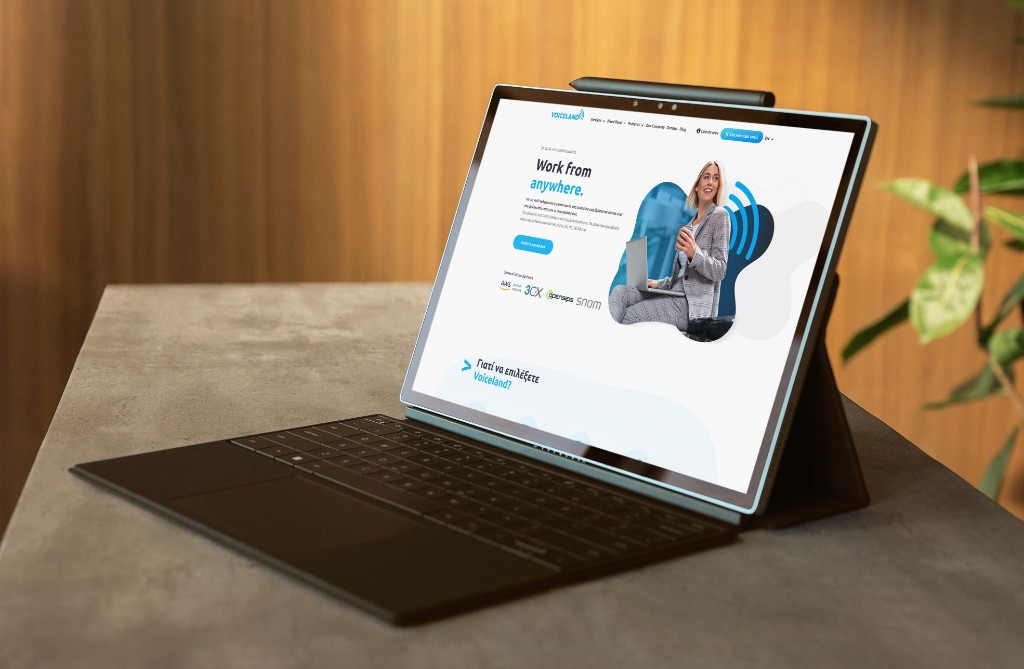
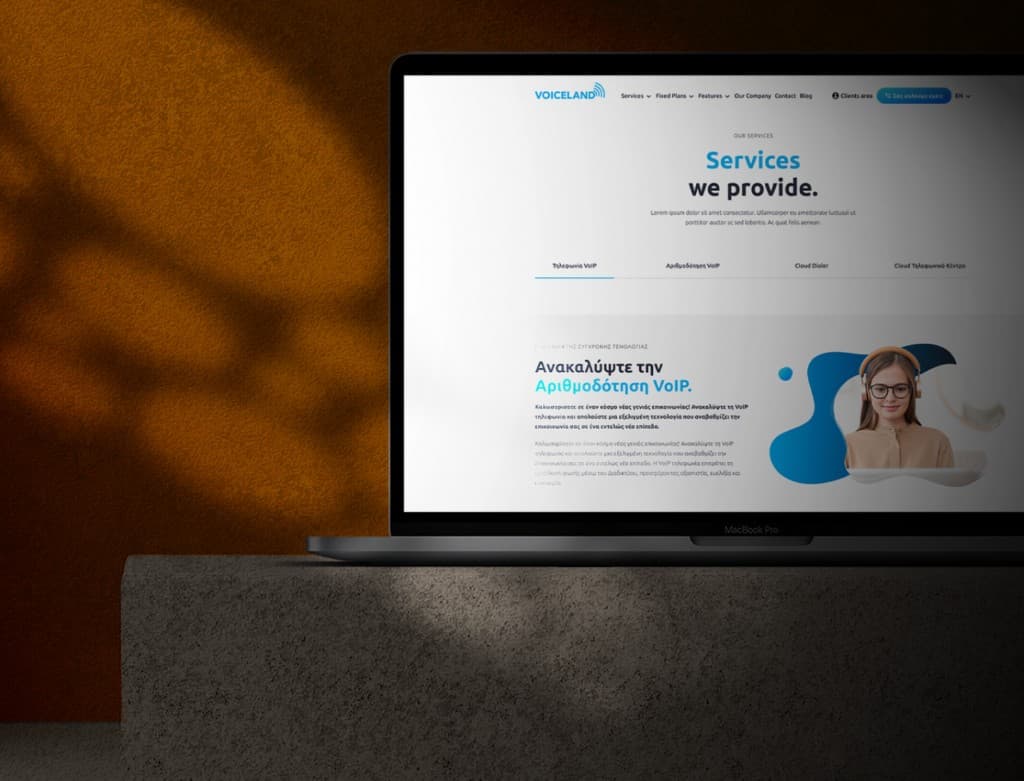
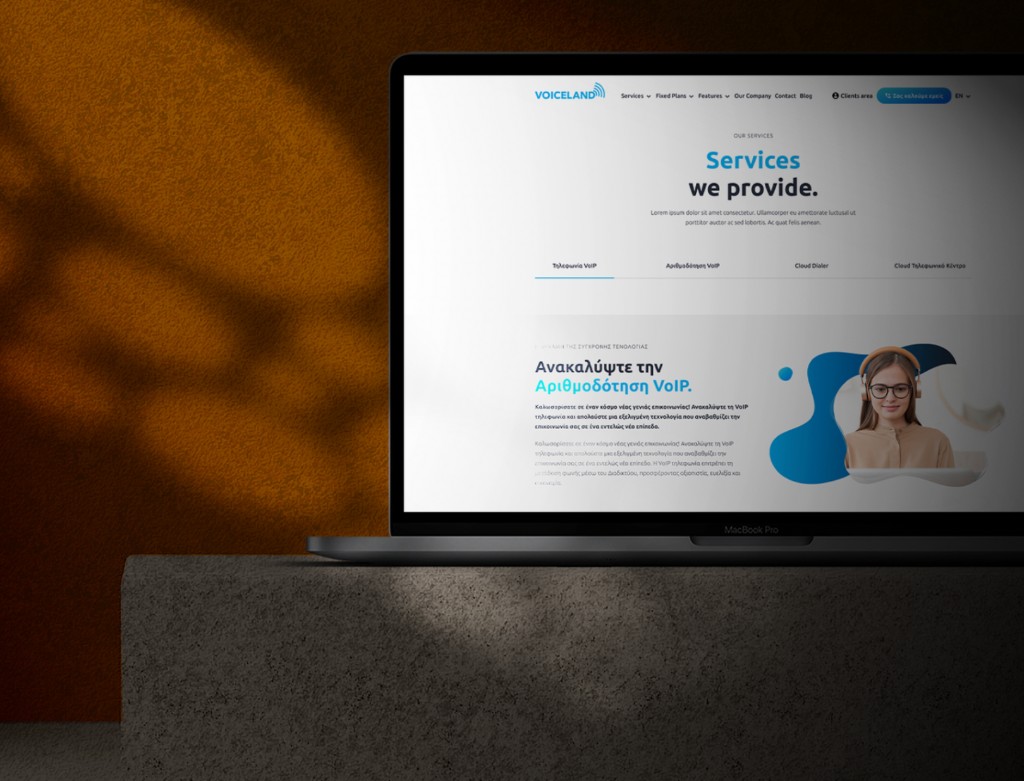
Voiceland is a Greek VoIP provider — PBX, call routing, conferencing, and analytics — serving businesses from freelancers to large enterprises. The existing site was technically functional but architecturally broken: the information hierarchy didn't reflect the product's depth, the pricing page caused drop-off before conversion, and the overall experience was misaligned with the modern, scalable brand Voiceland wanted to project.
I came in as Senior External Design Partner and Project Manager — owning the full UX architecture of the redesign while directing a junior designer on execution. Complete restructure of IA, e-commerce experience, and all key page templates.
What the Audit Found
Two pain points dominated the audit: the homepage and the pricing plans page. The homepage buried the product's value under outdated visual language and poor content hierarchy. The pricing page forced users to compare plans without enough scaffolding — they left before committing.
The deeper issue was structural. Navigation was flat for a product portfolio with genuine breadth. Users arriving from search or referral had no efficient path to the right service tier without reading through dense copy. That's not a copy problem. That's an IA problem.
The Mega Menu as IA Surgery
The most impactful single decision was rearchitecting navigation as a mega menu. Voiceland's range — VoIP plans, conference tools, call recording, PBX management, remote numbers — could not live in a flat nav bar without either burying options or overloading the header.
The mega menu grouped services by use case (individual, team, enterprise), surfaced the most-searched features immediately, and let users orient themselves before landing on a page. It also gave the junior designer a clear, repeatable component to build — structured constraints that held at every breakpoint.
Pricing: From Confusion to Scan-Ready
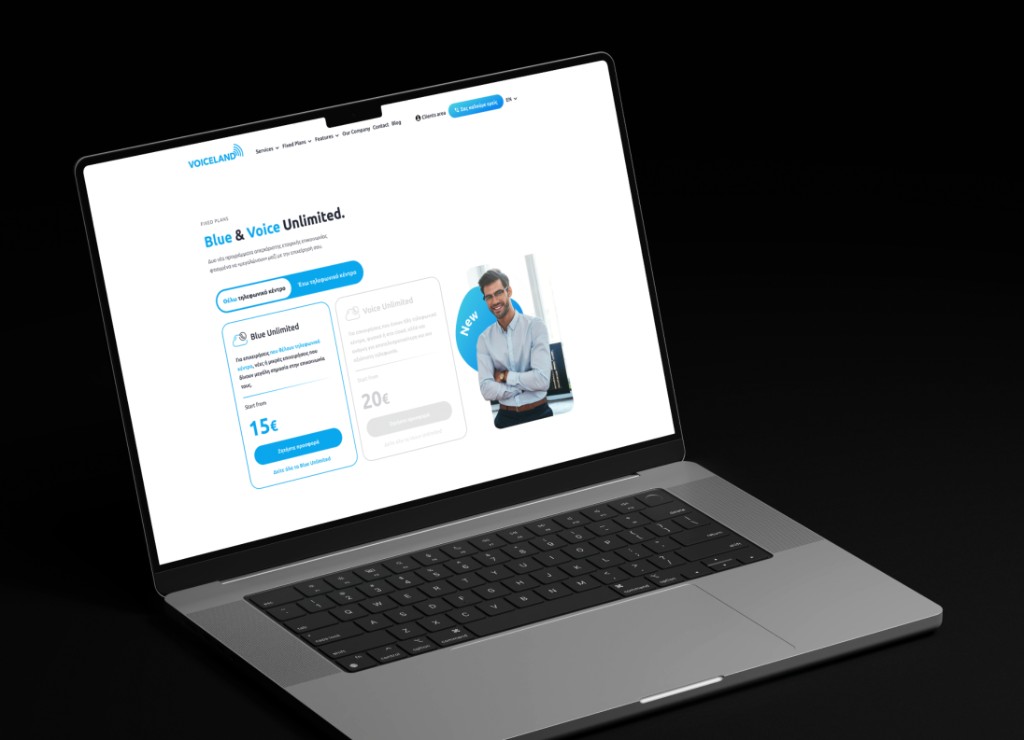
The pricing page got a full UX architecture overhaul. Feature rows grouped by category rather than listed flat — users could scan across tiers horizontally and identify the right plan for their scale without reading every cell. CTAs placed at the natural decision point after key differentiating features, not bolted to the top and bottom as afterthoughts.
Systems Thinking at the Template Level
Every service and content page received a reusable promotional section at the end. Rather than treating each page as a silo, this component created a consistent conversion touchpoint — a CTA block that could carry contextually relevant offers or generic brand messaging depending on placement.
This gave the junior designer a template to execute consistently, reduced design drift across the site, and gave Voiceland's marketing team a single component to update when campaigns changed. Systems thinking: applied where it's invisible but felt everywhere.
Contact & Conversion Flow
The contact page was rebuilt around intent routing: direct the user to the right path (support, sales, partnership) before surfacing form fields. This reduced misdirected enquiries to the sales team and served multiple audience types without visual overhead.
Leading the project
This was my first time leading another designer on a live client engagement. I structured it as deliberately as I structured the IA.
Workshop first. Before assigning any work, I ran a session with the junior designer to assess her capabilities, talk through the project goals, and discuss approach. The goal was to find what she could own end-to-end and what needed more scaffolding from me.
I owned the upstream work. Information architecture research, competitive analysis across the Greek and European VoIP market, all stakeholder workshops, all design rationale presentations. The strategic decisions stayed with me because that's what the client was paying for.
She owned execution under structure. Once a flow was specced, I assigned her component-level work with clear constraints — design tokens, layout rules, behaviour specs. She asked questions, learned the patterns, and shipped against the spec.
Every screen got audited before dev handoff. I reviewed her work before it left the team. This was the part that made the structure trustworthy from the client's side — they were getting one designer's judgment on every screen, regardless of who'd drawn it.
The structure worked. The project shipped. The team kept using the system after I rolled off — which is the only metric that matters when you're handing back work that has to live without you.
What it taught me
Leading is less about reviewing more screens and more about building the structure that makes a junior designer's work line up with a Lead designer's intent. I don't have a post-launch conversion number from Voiceland. What I have is a junior designer who learned the patterns, a system that survived my exit, and a Greek B2B SaaS site that finally matched the product behind it.